Home buying and selling guides
Guides on buying, selling and remortgaging a home, leasehold and transfer of equity.
Also see: civil litigation, commercial property, business and disputes guides.
38 guides, newest first
-
No sale, no fee conveyancing: what you still pay
No sale, no fee has no official definition, so ask what you still pay. If your sale or purchase with us falls through before exchange, you pay the File Opening Fee (Non-refundable), £200 + VAT (£240 inc VAT), and disbursements already paid out.
-
How much does a lease extension cost? Premium and fees
There is no fixed price for a lease extension. Most of the cost is the premium paid to the freeholder, which rises significantly once 80 years or fewer remain. Then your valuer, the freeholder's costs, HM Land Registry and Stamp Duty.
-
How long does it take to sell a house in the UK? Stage by stage
GOV.UK puts a whole sale at about 5 months on average, and about 12 weeks from sold subject to contract to moving in. Our legal work usually takes 8 to 10 weeks for a freehold home and 10 to 12 for leasehold, from the day you instruct us.
-
How long does a remortgage take? Stages and delays
A remortgage to a new lender usually takes around 4 to 8 weeks from application, and the legal part with us typically takes 4 to 6 weeks. The lender's offer sets the pace, and registration after completion does not hold up your new deal.
-
Selling a Leasehold Flat: The Management Pack, What It Contains and When to Order It
The LPE1 is the leasehold property enquiries form at the heart of a management pack. The landlord or managing agent answers it, not the seller, covering ground rent, service charge accounts, insurance, major works and building safety.
-
Leaseholder Deed of Certificate: What It Is and When a Flat Sale Asks for It
A leaseholder deed of certificate is the signed deed a flat owner completes to show whether they qualify for the Building Safety Act protections against historical safety costs. It applies in buildings 11 metres or taller, or with 5 or more storeys.
-
Leasehold Reform in England: What Is in Force and What Is Not (October 2026)
Leasehold reform in England, measure by measure: the two-year wait for a lease extension has gone, but marriage value, 990-year extensions, the ground rent cap and the leasehold house ban have not started.
 By Hasan Forqan
6-minute read
-
Which house survey do I need? RICS Level 1, 2 and 3 explained
A house survey is a detailed inspection of a property's condition. RICS has three levels, and the right one depends on the age, size, condition and complexity of the home. A lender's valuation is not a survey and does not protect you.
By Hasan Forqan
8-minute read
-
Do you pay stamp duty on shared ownership?
On a shared ownership home you choose how to pay stamp duty: in stages on the share you buy, or once on the full market value with a market value election. Worked examples, first-time buyer relief and what staircasing does.
By Hasan Forqan
8-minute read
-
Selling a shared ownership home: steps, costs, timings
If you own less than 100%, tell your landlord first. They have 4, 8 or 12 weeks, depending on your lease, to find a buyer at no more than the market value of your share. After that you can sell on the open market. At 100% you can usually sell on the open market.
-
How to repay a Help to Buy equity loan: steps and costs
To repay a Help to Buy equity loan, instruct a conveyancer, apply to the Help to Buy customer service team, get a RICS valuation (valid 3 months) and pay the £200 fee. You repay your loan's share of the market value or sale price, whichever is higher.
-
Is shared ownership worth it? Pros, cons and real costs
Shared ownership can be worth it if a 5% to 10% deposit on a 25% to 75% share gets you a home you could not otherwise buy. Rent can rise but not fall, repairs are yours at any share, and a resale starts with the landlord.
 By Honey Shakeri
12-minute read
-
Share of Freehold: What It Means, Pros and Cons
Share of freehold means you own a long lease of your flat and, with the other owners, a share of the building. Here is who pays for the roof, the pros and cons, what can go wrong and what a solicitor checks.
-
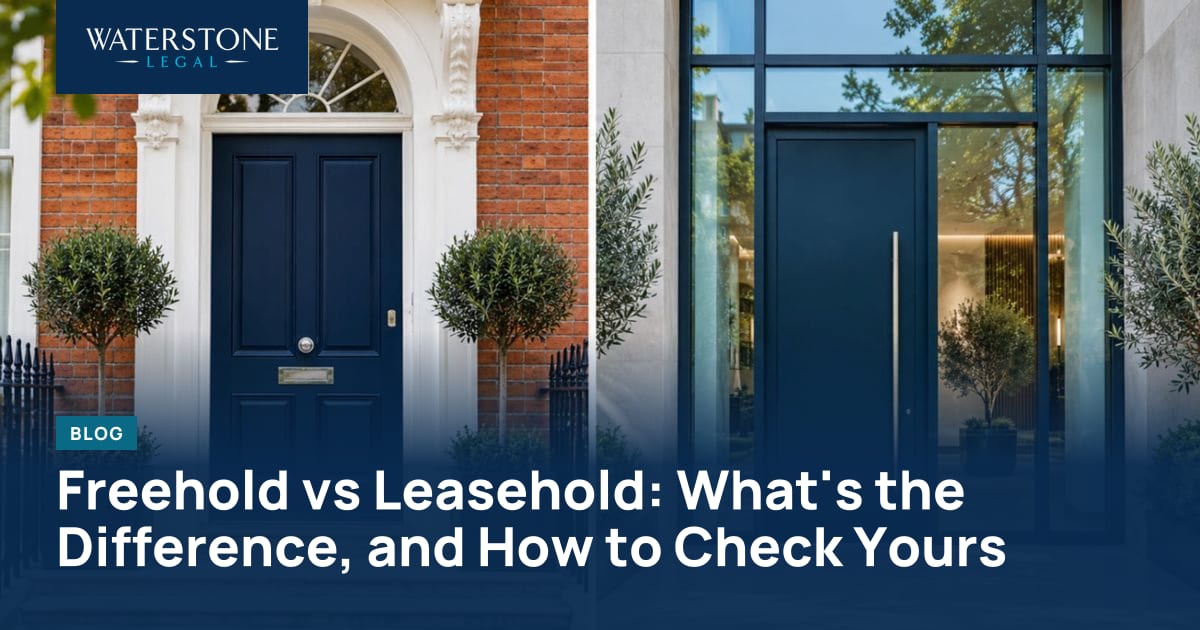
Freehold vs Leasehold: What's the Difference, and How to Check Yours
Freehold means you own the building and its land with no end date. Leasehold means you own the home for the years left on a lease, while the freeholder owns the building. Most flats are leasehold.
By Hasan Forqan
9-minute read
-
Completion statement explained, with an illustrative example
A completion statement is your conveyancer's final money summary for your purchase or sale: what comes in, what goes out and the balance you pay or receive. It arrives before completion, so your money can clear in time.
By Hasan Forqan
7-minute read
-
Buying a second home: steps, stamp duty and costs
Buying a second home follows the same legal steps as buying your main home, but you usually pay stamp duty at the higher rates, your Council Tax can rise, and Capital Gains Tax can apply when you sell. The steps, the costs and the refund rule.
By Honey Shakeri
8-minute read
-
Buying a leasehold property: what to check before you buy a flat
Buying a leasehold property means buying a lease, so check the years left, the ground rent, the service charge, the lease rules and the building safety paperwork. A leasehold purchase with us typically takes 10 to 12 weeks.
By Hasan Forqan
11-minute read
-
Right to Buy maximum discount: 2026 rules, regional caps and changes
The maximum Right to Buy discount is the lower of 70% of your home's value and your region's cash cap, £16,000 to £38,000 in England for applications from 21 November 2024. The Social Housing Bill would cut discounts further once it becomes law.
By Hasan Forqan
9-minute read
-
Compare conveyancing quotes: a line-by-line checklist
To compare conveyancing quotes, put them side by side line by line: the legal fee, each extra fee, every disbursement, the VAT and what is left out. Then check the firm is regulated, who will do the work and what you pay if the purchase falls through.
By Honey Shakeri
9-minute read
-
New build conveyancing checklist: reservation to keys
A new build checklist in the order things happen: instruct a solicitor the day you reserve, apply for your mortgage at once, check the warranty, roads, sewers and lease, compare your mortgage offer's expiry with the build date, snag the home and complete on notice.
By Hasan Forqan
13-minute read
-
Do first-time buyers pay stamp duty?
First-time buyers in England and Northern Ireland pay no stamp duty up to £300,000 and 5% on the part to £500,000. Over £500,000 there is no relief. Who qualifies, joint buyers, shared ownership and how the relief is claimed.
By Hasan Forqan
6-minute read
-
Solicitor Fees for Selling a House: What You Pay, Line by Line
What a solicitor charges to sell a house, from our own fee scale: our fees at each price band, every line they cover, the typical disbursements, what a sale does not cost you and what you pay if the sale falls through.
-
How long does it take to buy a house? Conveyancing timescales, stage by stage
GOV.UK allows about 12 weeks from an agreed sale to moving in, and the government's average from accepted offer to completion is around 120 days. Our legal work typically takes 8 to 10 weeks for freehold and 10 to 12 for leasehold, from the day you instruct us.
-
What happens on exchange and completion day?
Exchange makes the sale binding and fixes the completion date. Completion is the day the money moves and the keys are released. Here is each day in order, what you do, and what happens if completion is delayed.
-
Do You Need a Solicitor to Remortgage? When You Do, and When You Don't
You need a solicitor to remortgage if you move to a new lender. A product transfer with your current lender usually needs none. Here is when you need one, what the solicitor does, what it costs and how long it takes.
-
Conveyancing searches: what they show, cost and how long they take
Conveyancing searches are enquiries your solicitor makes to the council and other bodies about a property and the area. The three main ones, what each shows, what searches cost, how long they take and who pays.
By Honey Shakeri
9-minute read
-
Solicitor fees for buying a house: each cost, line by line
Our fee to buy a freehold home under £2m is £1,210-£2,010 + VAT. Each line explained, the disbursements, and the Stamp Duty and HM Land Registry fees you pay the government on top.
-
Transfer of equity explained: the 5 steps, the tax and how long it takes
A transfer of equity adds or removes someone on the deeds of a home without selling it. Here are the five steps, when stamp duty is due even though no money changes hands, and what the Land Registry, the lender and the tax rules each need from you.
-
Fixed Fee Conveyancing: Our Prices and What They Cover
Fixed fee conveyancing means the solicitor agrees the price of the legal work before it starts. See the fee lines inside our fixed fee, what is paid on top, what can change the price and what you pay if a deal falls through.
-
How hard is it to get a mortgage?
How hard it is to get a mortgage depends on five things a lender checks: your deposit, your income against your outgoings, your credit file, how you earn and the property. Use our checklist, then ask a lender or broker for a decision in principle.
-
Why is conveyancing taking so long, and what can you do about it?
Most delays sit with the searches, the seller's answers to enquiries, the mortgage offer, the chain or a leasehold pack. The government's average from accepted offer to completion is around 120 days. Find the hold-up, then you know who to chase.
-
What is conveyancing? A plain-English glossary of the terms
Conveyancing is the legal work of transferring ownership of a property from the seller to the buyer. This plain-English glossary explains the terms you will hear, grouped by the stage you meet them, from SSTC and searches to exchange and completion.
By Hasan Forqan
13-minute read
-
Changing conveyancers during a sale or purchase: a guide
People sometimes need to change conveyancers during a property sale or purchase. Find out how a matter moves between firms, what it may cost and what to consider before making a decision.
-
Joint ownership of a home: joint tenants or tenants in common?
Joint ownership of a home means two or more people own it together, as joint tenants or as tenants in common. Here is how each works on death and separation, how to check which you have and how to change.
-
Lease Extension: How the Section 42 Process Works
A lease extension adds 90 years to the lease on your flat at a peppercorn ground rent, if you use the formal section 42 route. Who qualifies, each step and deadline, who pays what, and where the reforms stand.
By Honey Shakeri
10-minute read
-
What is gazumping, and is it legal in the UK?
Gazumping is when a seller accepts your offer, then sells to someone who offers more. It is legal in England and Wales because an offer is not legally binding until contracts are exchanged. Speed and preparation lower the risk.
-
Selling a house checklist: documents, forms and timing
Before you sell: order an EPC, gather ID, certificates and guarantees, instruct a solicitor before you list and fill in the TA6 and TA10 (plus the TA7 for leasehold). Then follow the steps from offer to completion.
By Honey Shakeri
9-minute read
-
When do you pay stamp duty? The 14-day rule explained
The buyer pays stamp duty, usually through their solicitor on completion day. The return and tax are due within 14 days. When the 14 days start, what happens if you are late, how it is paid and how to claim a refund.